


Booking & Contact InformationSpeaking & Book Clubs
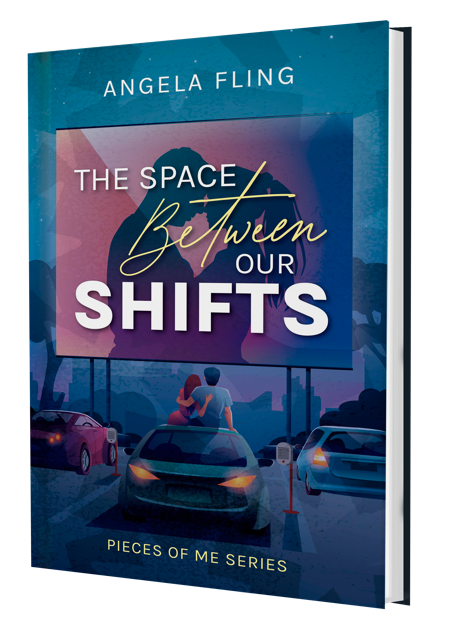
Angela Fling, author of The Space Between Our Shifts, draws on her character Nancy Valor’s personal experiences to deliver business-centered keynotes on trust, leadership, and resilience.

Topics
Leadership, Trust, Emotional Intelligence, Organizational Culture
Availability
Keynotes, Workshops, Corporate Retreats. Tailored to meet audience needs.
Fees & Packages
Quoted upon request based on scope, location, and customization requirements.
Signature Keynotes & Workshops
Angela Fling turns the story behind The Space Between Our Shifts into practical lessons for leaders and teams.
Choose a topic below, or ask about a customized session.
-
"When clarity is impossible, trust becomes the strategy."
Description: In today’s volatile business landscape, leaders must guide teams through uncertainty without sacrificing trust. Angela Fling draws on her experience as the Author of The Space Between Our Shifts and the story of Nancy Valor, a character who faces fear yet struggles to communicate as clearly and openly as she needs to, highlighting the challenges of presence, vulnerability, and connection. This keynote reveals how transparency, grounded communication, and strategic vulnerability can strengthen organizational trust. Leaders will learn to communicate effectively amid ambiguity, avoid isolation, and foster cultures where honesty drives stability and performance.
-
"Connection is currency — invest wisely."
Description: Strong businesses are built on strong relationships. This session reframes emotional intelligence as a form of capital that fuels collaboration, innovation, and client loyalty. Through Nancy Valor’s evolving relationships, audiences explore how early-life patterns shape workplace behavior, how guardedness can limit growth, and how trust-rich environments unlock team potential. Attendees gain actionable strategies to cultivate connection that strengthens partnerships and enhances leadership influence.
-
"Your past shapes your voice — your future depends on reclaiming it."
Description: Confidence is not an automatic adult skill — it’s shaped by the stories we carry from adolescence. Using Nancy Valor’s coming-of-age summer as a lens, this keynote reveals how formative experiences quietly shape professional identity, leadership voice, and negotiation behavior. Participants learn to identify limiting internal narratives, embrace mentorship, and rebuild confidence with intention. This session is ideal for emerging leaders, women in leadership, and anyone navigating career transitions.
-
"Growth happens in the in-between — learn to lead there."
Description: Organizations and professionals alike face seasons where the ground feels unsteady. Angela Fling’s character Nancy Valor unfolds in these liminal spaces — between adolescence and adulthood, between symptoms and diagnosis, between fear and courage. This keynote translates Nancy’s emotional journey into a roadmap for navigating professional transitions with resilience and clarity. Attendees learn how to remain effective during change, turn uncertainty into opportunity, and use relationships as stabilizing anchors. Perfect for change-management initiatives and leadership development programs.
-
"Your story is your power — lead with it."
Description: People don’t follow titles — they follow stories. This keynote demonstrates how personal narrative becomes a powerful leadership tool for building trust, inspiring teams, and shaping culture. Through the dual-timeline structure of Nancy Valor’s life, audiences see how origin stories clarify values and deepen connection. Leaders learn to craft and communicate their own narratives with authenticity, using vulnerability strategically to strengthen influence and team loyalty.
-
“We don’t see reality — we see our version of it.”
Description: Perception feels objective, but it’s anything but. We don’t just see the world — we see it through lenses shaped by emotion, experience, and bias. What we feel about someone or something quietly colors what we believe are facts. Truth doesn’t disappear; it simply gets tinted. This keynote explores how leaders and teams can better understand the filters shaping their judgments, decisions, and relationships. Through Nancy’s deeply personal point of view — where her fears, memories, and assumptions shape how she interprets her world — audiences learn how perception influences leadership clarity, conflict, trust, and organizational culture. Participants leave with tools to identify their own filters, reduce misinterpretation, and communicate with greater accuracy and empathy.
-
“Unexamined habits shape our lives more than conscious choices.”
Description: We all carry patterns — behaviors, reactions, assumptions — that feel automatic because we’ve repeated them for years without ever asking where they came from. These patterns quietly influence how we lead, how we communicate, and how we interpret the world around us. This keynote explores the psychology of unexamined habits and the emotional imprints that drive them. Through Nancy’s deeply personal lens, audiences see how old survival strategies can masquerade as leadership instincts, how familiar behaviors persist even when they no longer serve us, and how awareness becomes the first step toward meaningful change. Participants learn how to identify their own repeating loops, interrupt outdated narratives, and build new patterns aligned with clarity, trust, and intentional leadership.
-
“Delegation isn’t weakness — it’s how strong leaders stay strong.”
Description: Many leaders carry the belief that asking for help signals incompetence, so they take on too much, hold too tightly, and quietly drown under the weight of responsibility. But the truth is simple: no one leads well alone. This keynote explores the emotional and psychological barriers that keep leaders from delegating — fear of losing control, fear of being judged, fear of being disappointed — and how these fears create patterns that limit growth. Through Nancy’s experience of trying to carry everything herself, audiences see how self‑reliance can become self‑sabotage. Participants learn how to identify what they should release, how to delegate with clarity and trust, and how asking for help becomes a strategic act that strengthens teams, builds resilience, and prevents burnout.
-
“Choice is influence — control is an illusion.”
Description: Leaders often confuse the power to choose with the power to control. But control — over people, outcomes, circumstances — is never truly possible. The only thing anyone can control is themselves: their reactions, boundaries, decisions, and presence. This keynote explores the profound difference between external control and internal mastery. Through Nancy’s lived experience of trying to manage everything around her while her internal world shifted beneath her feet, audiences see how control creates tension, fear, and rigidity, while choice creates clarity, agency, and grounded leadership. Participants learn how to release the exhausting pursuit of controlling others, how to anchor themselves in self‑regulation, and how to lead from a place where influence flows naturally because it’s rooted in authenticity, not force.
Let’s Connect
Book Club Discussion Questions
Can’t have Angela Fling come to you? Bring the conversation to your book club. Here are discussion questions from the author herself.
These questions contain light spoilers, so save them for after you’ve finished the book!
Question 1
What were the most relatable themes in this book?
Question 2
Which character’s insecurity felt the most realistic to you?
Question 3
How did Nancy’s internal doubts skew how she interpreted other people's actions or her own actions?
Question 4
Was there a specific moment where trust was permanently broken for Nancy? Do you think that trust can be rebuilt?
Question 5
Do you think trusting another person should be given before earned?
Question 6
Many people do/hide things to "protect" those they love and to “protect “themselves. Did you find Nancy’s choices justifiable?
Question 7
A book about illness and insecurity can be heavy. Did any specific scene or internal monologue resonate deeply with your own life experiences?
Question 8
Given the heavy themes, did the ending leave you feeling hopeful, devastated, or ambivalent?